
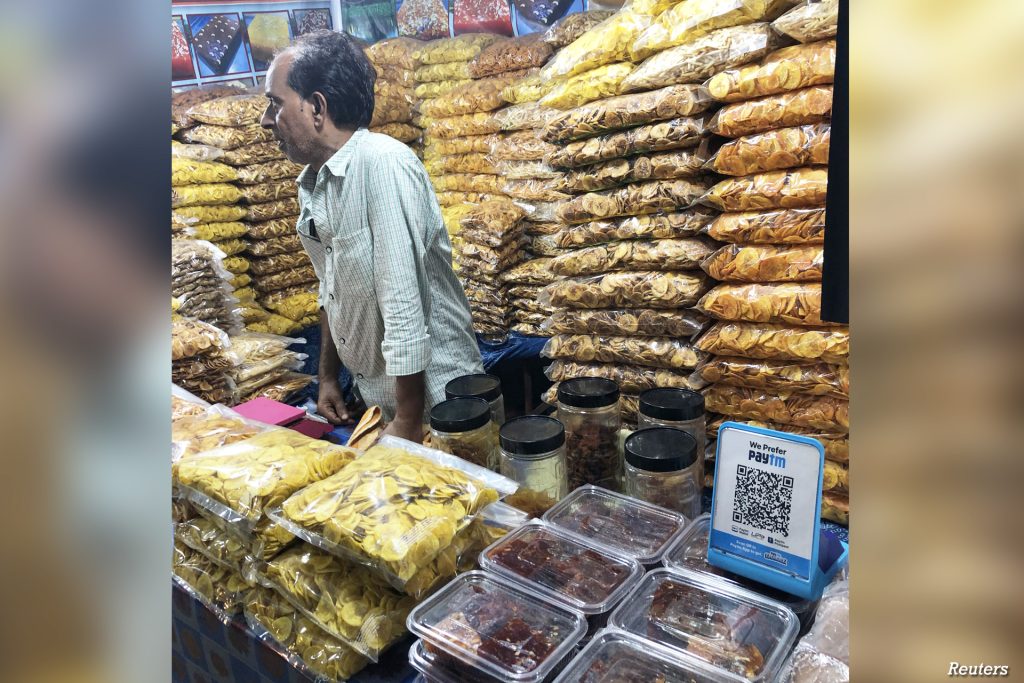
By Reuters
MUMBAI (Reuters) — India is about to find out what happens when a digital payment system used by more than 500 million people stops being completely free.
A new merchant fee on India’s Unified Payments Interface, or UPI, could generate hundreds of millions of dollars for Google Pay and Walmart-backed PhonePe, potentially strengthening their already dominant position in one of the world’s biggest digital payment markets.
The change offers a glimpse of the trade-offs facing countries such as the Philippines as cashless payments and QR-based transactions become part of everyday life: keeping payments cheap for consumers while giving the companies operating them enough incentive to keep expanding.
From October 15, merchants in India can be charged a 0.4% fee on UPI transactions above 2,000 rupees, or about ₱1,200.
UPI is India’s ubiquitous instant-payment network, used for purchases ranging from roadside tea to expensive smartphones. It has been free for six years, helping drive rapid adoption.
The new fees could generate as much as $1.1 billion in annual revenue for payment apps by March 2028, brokerage Bernstein estimates.
The biggest winners could be PhonePe and Google Pay. Together they handled about 80% of UPI payment value last month, implying roughly $900 million of the potential revenue pool based on their current market shares.
“The introduction of MDR is a positive step towards offsetting substantial operational costs and liabilities,” PhonePe co-founder Rahul Chari said.
The fee, known as a merchant discount rate or MDR, also brings UPI closer to other major payment systems. Merchant fees elsewhere can range from about 0.6% to 1.5%.
Bigger players could get even bigger
The additional income could make it more attractive for PhonePe and Google Pay to push deeper into rural India, where smaller transactions previously made expansion less commercially attractive, two industry sources told Reuters.
Even low-value payments can provide valuable transaction data that payment companies can eventually use to offer loans and other financial services.
But that creates another problem: the two biggest apps could become even harder to challenge.
India’s National Payments Corporation, which operates UPI, has already twice delayed plans for a 30% market-share cap.
Smaller payment apps may instead concentrate on higher-value transactions such as airline and train tickets, utility bills and business payments, where the new fee provides greater potential revenue.
“It might on the margins help smaller players with existing distribution, but the largest benefits are likely to accrue to large firms like PhonePe or Google Pay,” said Joseph Sebastian, vice president for investments at Blume Ventures.
Will consumers end up paying?
That may be the bigger question for India’s shoppers.
Merchants are prohibited from explicitly passing the new fee on to customers, but industry executives expect at least some businesses to recover the cost indirectly.
Political critics have warned that charging merchants could undermine one of UPI’s biggest attractions and encourage people to return to cash.
For now, that looks unlikely.
At Suvidha, a large clothing retailer in Mumbai, about 80% of daily sales of roughly 2 million rupees already come through UPI.
“Customers are too used to UPI and the cost is quite small, so it doesn’t make too much difference,” manager Govind Rawal said.—Reuters


