By Joey Salceda
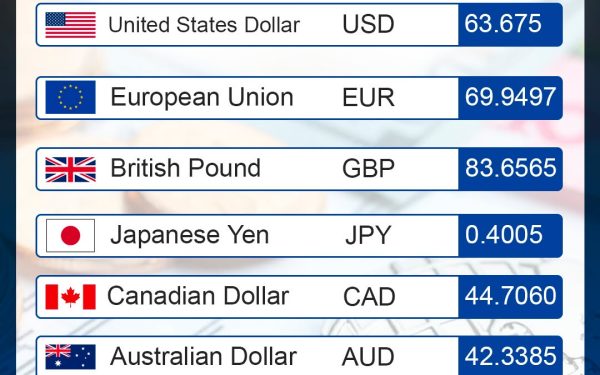
The Philippine peso breached sixty to the dollar this morning. For months, that number loomed over our economic conversations like a superstition. Now that it has arrived, the right question is not whether to be frightened. The right question is: what does sixty actually mean for Filipino households, and what should we do about it?
My answer, after reviewing the data closely over the past three weeks, is this: prepare, not panic.
The signals from the top of government confirm the stakes. President Marcos and BSP Governor Eli Remolona met yesterday at Malacañang to discuss the currency situation. The BSP has intervened in the foreign exchange market to smooth the peso’s slide, but Remolona has been clear that the central bank is not drawing a line in the sand at any particular level. Their doctrine is orderly adjustment, not defense. That is the right posture — but it means the burden falls on fiscal and sectoral policy to cushion the landing. Monetary policy will not do it alone.
The knee-jerk instinct when the peso weakens is to treat depreciation as uniformly bad. But the Philippine economy has structural features that create partial, automatic offsets. The most important is OFW remittances. Overseas Filipino workers earn in foreign currencies and send them home. Every dollar remitted converts into more pesos than before. The Bangko Sentral ng Pilipinas confirmed last Monday that cash remittances grew 3.5 percent year-on-year to $3.02 billion in January alone. The weaker peso contributed directly to that nominal increase. The Middle East hosts roughly 40 percent of all OFWs, but the top sources of remittance value remain the United States, Singapore, and Saudi Arabia. The tail risk from the conflict zone is real, but manageable as long as we do not see mass repatriations — which are not currently indicated.
The same countercyclical logic applies to semiconductor and electronics exports, which are denominated in dollars. When the peso weakens, our peso-cost producers receive more pesos for every dollar of exported value. With global semiconductor demand projected to expand this year, this is a moment to push harder on export promotion, not retreat.
Third, and most underexplored as a policy response: inbound tourism. And here, the opportunity is concrete enough to quantify.
The Philippines closed 2025 with 6.48 million visitor arrivals, barely 0.76 percent above 2024 — well short of targets. The DOT has set a revised 6.7 million arrival goal for 2026. But the peso at sixty is now doing something no promotional campaign could: it is making the Philippines dramatically cheaper for every inbound traveler earning in a stronger currency. A Korean, Japanese, or European tourist gets roughly seven to eight percent more value for their money today than they did twelve months ago. That is a structural price discount that goes directly into their decision to book.
The problem is routing. The DOT had planned to lean on the Middle East as both a transit corridor and a source market for 2026. The conflict has effectively closed that option. The strategic pivot must be to East Asian hubs — Narita, Incheon, Hong Kong, Changi — and the markets they serve. And that pivot must be active, not passive. Government must help organize the product: bundled packages, coordinated with LGUs, accredited tour operators, and airline partners, marketed directly to travel agencies in Japan, South Korea, Taiwan, and Europe. The exchange rate does the selling. Government’s job is to organize what visitors actually book.
The numbers justify the effort. South Korea, our single largest tourism market, fell 18.5 percent in 2025 to 1.35 million arrivals. Recovering even half that decline through active outreach and peso-advantaged packages routed through Incheon adds roughly 125,000 arrivals. Japan, our third-largest market at around 256,000 arrivals in the first half of last year alone, is a credible 20-percent growth candidate given the exchange rate and expanding air connectivity — another 50,000 or more visitors. Taiwan, where Filipino outbound travel hit a record 630,000 in 2025, is a market ripe for reciprocal flows if we package the offer properly. Even a modest 10-percent uplift across Korea, Japan, and Taiwan, combined with European rerouting through Changi, could add 200,000 to 300,000 arrivals above the base target. At an average tourist spend of $1,000 to $1,200 per arrival, that is $200 to $360 million in additional foreign exchange receipts — material for the current account precisely when we need every dollar.
None of this means the situation is comfortable. It is not. The real embedded risk in a weaker peso, compounded by Brent near $100 a barrel, is inflation. Crude has held near that level as the conflict continues to threaten supply through the Strait of Hormuz, with throughput selective but not yet fully disrupted. The Department of Economy, Planning, and Development projects inflation could reach as high as 7.5 percent in March and April. The Bangko Sentral ng Pilipinas has its next policy meeting on April 23. The data between now and that date will determine whether Governor Remolona reverses the easing cycle the BSP had just begun.
The peso will likely test sixty-two before it stabilizes. That is not a catastrophe. The exchange rate simply adjusts to the facts on the ground. And we can either adjust our own strategies in light of this, or change the facts that the currency adjusts to.
https://joeysartesalceda.substack.com/p/the-peso-at-sixty-prepare-not-panic