
By Robert Fullem, Reuters
NEW YORK, Aug 21 (Reuters) – Japan’s currency has seemed little moved by official efforts to halt its slide this year, but a look at past price patterns suggests a much bigger strengthening move could still be coming.
One tool technical analysts use to predict future prices is history, and the yen’s past behavior may be especially useful here. In previous cases dating back to 2022, Japanese interventions have typically triggered a quick jump in the yen’s value against the dollar, followed by a slow drift back toward weakness. But eventually, in many of these past episodes, a much larger yen rally has followed, sometimes catching investors by surprise.
Because it is usually quoted in yen per dollar, a falling line on its price chart means the Japanese currency is strengthening.
The dollar’s recovery against the yen from the most recent intervention, at the end of July, has struggled near 159.60, the midpoint of the latest intervention-driven slide from July’s high of 163.99 to a low of 155.20, according to data supplied by LSEG. The midpoint of a major move is often a closely watched stopping point for market prices, while hesitation before reaching a big round number such as 160 is also significant for traders.
That hesitation leaves the dollar vulnerable to slipping below support at 158. A move below there could open the way toward 155, then this year’s low of 152.10, and possibly toward 149 — a spot where a price gap was left on the chart back in October, which some traders expect to eventually get filled. Surprise U.S. Treasury bond buyback plans, which have weakened the dollar broadly, could help push things in that direction.
If instead the dollar climbs back above 159.60 and then 160, that would suggest yen weakness toward 164. One factor that could contribute to that outcome would be persistently high oil prices, which tend to hurt the yen.—Reuters
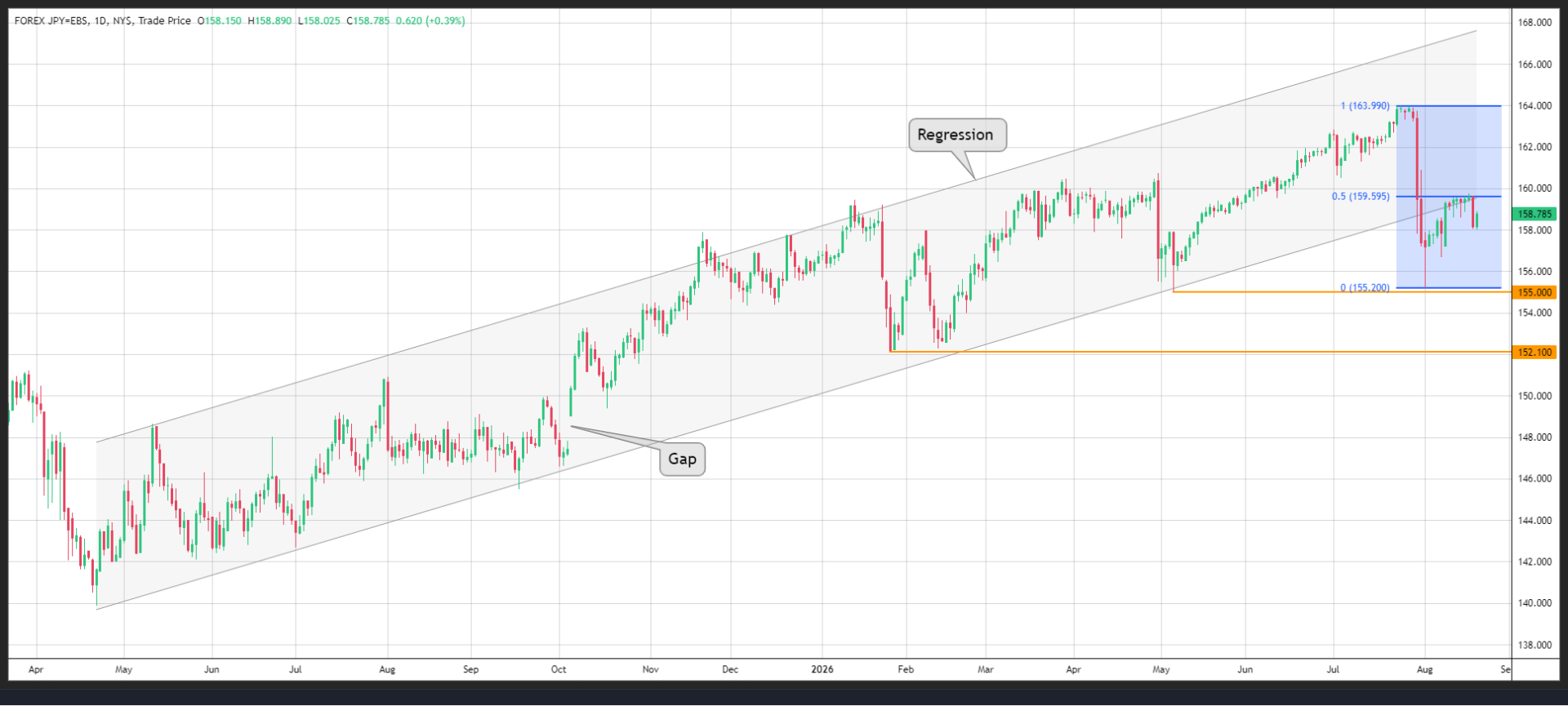
What the chart shows:
- Dollar’s rebound against the yen has stalled near 159.60, below the 160 level
- A fall under 158 could open the way to 155, then 152.10, and a gap near 149
- A close above 160 would instead point to a weaker yen and a move to 164
(Daily markets commentary from Reuters analysts on the signals financial charts are sending – and what they might mean.)


