Why Tottenham’s Pressing Strategy Could Exploit Arsenal’s Backline on hitclub99.net
A central midfielder receives a short pass from a center-back while the opposition’s forward lines shift synchronously inward. The receiving player looks up, but two passing lanes are immediately sealed by occupying wingers cutting inside. A third option remains open, but the nearest midfielder has already stepped across to block the diagonal. Forced into a heavier touch, the ball carrier loses balance. Within three seconds, the press collapses around the ball, isolating the receiver and creating a turnover in a dangerous zone. This sequence illustrates the mechanical reality of modern high-intensity pressing systems, specifically how coordinated vertical pressure disrupts structured build-up play.
The Immediate Tactical Breakdown
Tottenham’s pressing architecture relies on triggered, rather than continuous, aggression. The system does not chase possession blindly; it waits for specific catalysts before committing numerical superiority to win the ball back. Arsenal’s backline typically operates within a structured possession model, utilizing short passes, width from fullbacks, and progressive switching of play. When these elements interact with a well-timed press, structural weaknesses emerge. The primary vulnerability lies in transition moments: when a center-back receives the ball with limited forward outlets, or when a fullback attempts a diagonal switch under lateral pressure.
The exploitation pattern follows a predictable chain. First, the opposition denies immediate forward progression. Second, they force horizontal or backward circulation. Third, they compress the playing area, reducing time and space. Fourth, they trigger a sudden overload on the ball carrier. Arsenal’s defenders must navigate this compression while maintaining composure, reading overlapping runs, and executing precise weight-of-pass decisions. Any hesitation or misjudged weight creates an opportunity for rapid ball recovery and forward transition.
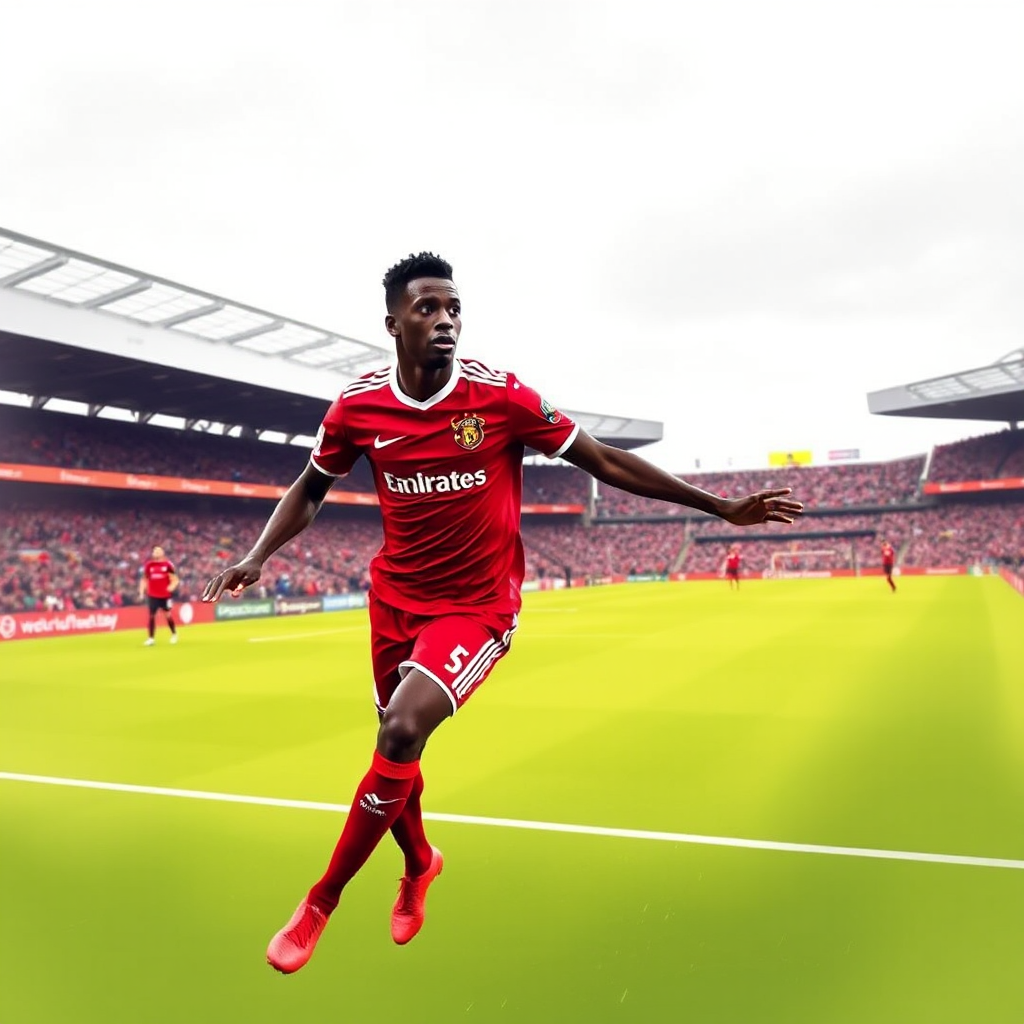
 Hình minh hoạ: hitclub
Step-by-Step Implementation Guide
- Identify Trigger Conditions – Map the moments when the press activates. Common catalysts include a backward pass to a center-back facing their own goal, a poor first touch, a heavy reception near the sideline, or a fullback isolated against a tracking winger. Note the exact body orientation of the receiver; feet pointing sideways or backward usually signal readiness to engage.
- Establish Positional Baseline – Deploy the front line in a staggered formation rather than a flat line. One forward occupies the central channel, another cuts inside toward the half-space, and the wide attacker holds position to deny the fullback’s outward run. This arrangement forces the buildup team toward predictable zones.
- Execute Lane Denial – Assign specific pressing units to seal passing corridors. The closest midfielder blocks the central route, the wing-back covers the diagonal switch, and the fullback applies controlled pressure on the ball carrier without overcommitting. Communication here prevents gaps from forming between lines.
- Compress and Collapse – Once the trigger hits, adjacent players shift inward simultaneously. The objective is not necessarily to tackle immediately but to reduce available options until a forced error occurs. Maintain compact vertical spacing so that recovered balls do not bypass multiple layers.
- Transition Preparation – While pressing, reserve players must assume rest-defense positions. Two or three participants should stay between the press and the goal to intercept long balls or counter-runs. Recovery speed after a failed press determines whether the team maintains control or concedes immediate chances.

Rationale Behind Each Phase
Trigger identification serves as the foundation because uncoordinated pressing exhausts stamina and opens spaces. Analyzing playback footage reveals that successful presses activate only when the risk-to-reward ratio favors engagement. Forcing a defender backward pushes them away from support structures, making subsequent combinations less predictable.
Positional baseline staggering prevents linear coverage patterns that opponents easily read. Flat pressing shapes allow attackers to play through or over the top with minimal resistance. A staggered layout creates overlapping responsibilities, requiring coordinated movement but generating higher interception potential.
Lane denial operates on spatial economics. Football fields contain finite passing routes; restricting access to three to four primary corridors increases decision fatigue for the receiving side. When options shrink, players default to lower-percentage passes or hold the ball longer, both of which accelerate press activation windows.
Compression transforms individual pressure into systemic control. Isolated ball carriers lack temporal margin to scan fields accurately. Collective inward shifts eliminate escape routes, turning possession into a liability. The structural advantage emerges not from aggressive tackling but from systematic reduction of viable solutions.
Transition preparation mitigates counter-pressure. High-risk pressing inherently leaves defensive shape vulnerable. Maintaining a structured rest defense ensures that even if the initial press fails, the team retains a reliable fallback mechanism. This balance separates sustainable systems from reactive ones.
| Press Component | Primary Objective | Success Indicator |
|---|---|---|
| Trigger Activation | Synchronize engagement timing | Forced backward or sideways passes |
| Lane Sealing | Eliminate primary progression routes | Reduced successful completion rate in final third |
| Rest Defense | Protect against counter transitions | High shot quality prevention on opponent breaks |

Controlling Variable Risks and Common Errors
Even structurally sound pressing frameworks collapse when executed incorrectly. Misreading triggers leads to premature commitments, leaving the middle third exposed. Defenders who step aggressively without covering passing lanes create instant breakthrough opportunities. Similarly, wingers who drift too deep to press central players abandon wide zones, inviting overlaps and inverted runs that bypass the entire defensive line.
Another frequent mistake involves inconsistent communication. Pressing requires synchronized movement; if one unit shifts inward while others maintain original positioning, vertical channels open immediately. Players must rely on standardized verbal cues or visual markers to coordinate simultaneous compression.
Overloading the ball side without preparing the weak side generates imbalances. When five players converge on one flank, the opposite half-space becomes highly accessible. Weak-side defenders must track overlapping runners and adjust cover shadows accordingly. Failure to rotate cover creates mismatched duels favoring the attacking team.
Data-driven analysis platforms often highlight these operational risks by tracking pressing intensity versus possession retention rates. Analysts using resources like those found on hitclub frequently cross-reference trigger frequency with turnover outcomes to validate system efficiency. However, quantitative metrics alone cannot replace observational calibration. Coaches and tactical evaluators must verify screen data against live positional behavior, ensuring that recorded press actions align with actual spatial control.
Mitigation strategies require deliberate training replication. Session designs should isolate trigger recognition drills, combining video review with on-field simulation. Small-sided games with modified scoring incentives reinforce lane denial discipline. Regular film sessions focusing on recovery positioning strengthen transition habits. Consistent feedback loops prevent habitual deviations from the intended structure.

Frequently Asked Questions
- How do you determine the optimal moment to activate a vertical press? Look for receiver orientation, touch quality, and surrounding pressure density. Backward-facing players, heavy touches, and isolated receptions typically indicate the most effective activation window.
- What happens if the initial press fails to win possession? The team must instantly revert to a mid-block or low-shape retreat. Rapid lateral shifting prevents through-balls, while designated cover defenders adjust angles to limit shooting opportunities on the counter.
- Can this pressing approach work against teams that play direct long balls? Partially. High presses struggle against frequent vertical distribution targeting second-ball specialists. Adjustments involve selective pressing depth, encouraging long throws while protecting penalty areas, and prioritizing aerial duels over ground recovery.
- Is there a measurable threshold for press sustainability during matches? Yes. Most elite systems maintain maximum intensity for sixty to seventy minutes before transitioning to controlled engagement phases. Stamina management, substitution timing, and situational rolling determine overall match effectiveness.
Practical Application Checklist
- Record opponent build-up patterns prior to matchday
- Map preferred receiving angles for each center-back
- Designate primary trigger indicators for each pressing line
- Assign weak-side cover responsibilities explicitly
- Review transition recovery positioning weekly
Targeted Recommendations by Reader Group
Coaches and academy directors should prioritize trigger recognition training over pure conditioning. Repetitive scenarios that simulate backward passes and isolated receptions develop faster decision-making than generic fitness circuits. Integration of video modeling with live positional drilling accelerates tactical retention.
Performance analysts and data scientists ought to combine tracking metrics with event-based coding. Possession pressure maps reveal spatial control, while trigger logs confirm activation accuracy. Cross-referencing these datasets identifies disconnects between intended structure and actual execution.
Fan communities and tactical enthusiasts benefit from focusing on systemic patterns rather than isolated mistakes. Evaluating rest defense rotation, lane denial consistency, and transition recovery provides a more reliable assessment of pressing effectiveness than counting total tackles or interceptions. Viewing matches through structured phases improves predictive accuracy and reduces reactive criticism.