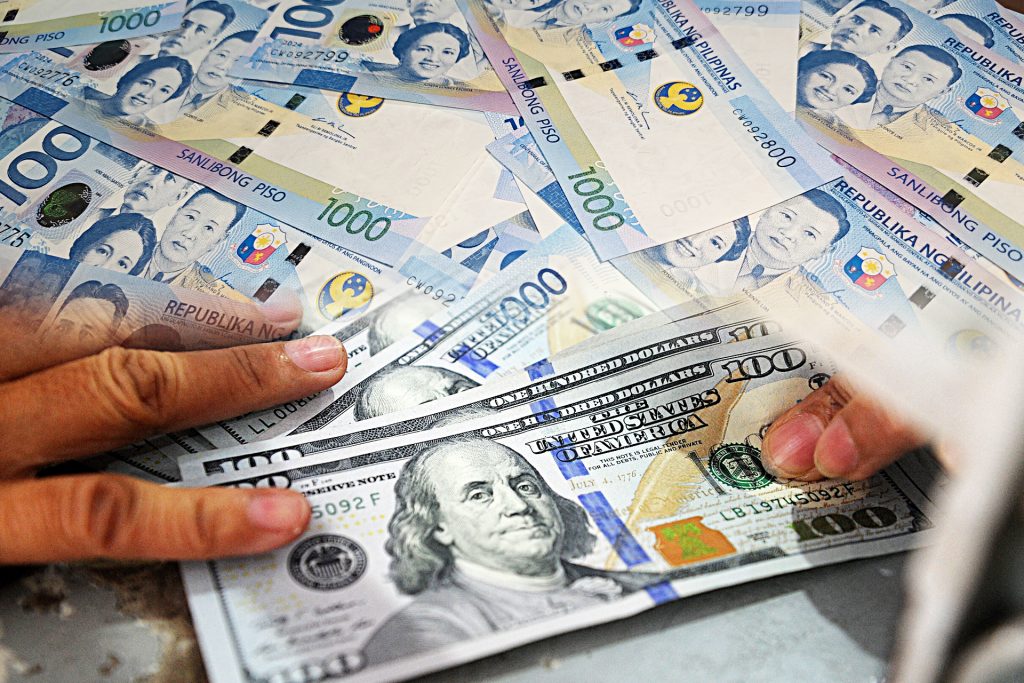
The Philippine peso fell to a fresh record low of 62.40 per dollar on Monday, extending its slide as a stronger greenback and expectations of tighter U.S. monetary policy pressured the currency.
The peso weakened 13.5 centavos from its previous record close of 62.265 on Aug. 28, the last trading day, data from the Bankers Association of the Philippines showed.
It opened at 62.25, its strongest level of the session, before steadily losing ground to close at the day’s low of 62.40, also a new intraday record.
The dollar strengthened after hawkish signals from Federal Reserve Chair Kevin Warsh reinforced expectations that U.S. interest rates could remain elevated or rise further. Higher U.S. Treasury yields have also increased the appeal of dollar-denominated assets.
Elevated oil prices added pressure on the peso, with Brent crude hovering around $91 a barrel amid renewed U.S.-Iran hostilities.
Higher crude prices typically weigh on the currencies of energy importers such as the Philippines by increasing import costs and demand for dollars. A weaker peso, in turn, raises the local cost of imported fuel and other goods.
The Bangko Sentral ng Pilipinas has said it does not defend a specific exchange rate level but may intervene in the foreign exchange market to curb excessive volatility.
The peso’s latest decline puts the 62.50-per-dollar level in focus after the currency breached successive record lows.